RUN AND PLAY:
Learning to play music is hard. In my readings about the brain and how it functions, I am always looking for a shortcut to faster musical progress. When I read in Oliver Sack’s book “Musicophillia” about a non-musical physician that became a classical pianist and composer after being struck by lightening in a phone booth, I hung out around phone booths hoping for a hit. In Seattle, however, you are more likely to be struck by an expresso cart than by a bolt from the blue.
A more realistic path to musical enlightenment is found in the new brain research detailed in John Ratey’s new book, “Spark: The Revolutionary New Science of Exercise and the Brain”. This is a must-read for anyone who cares about their brain. The short version is that aerobic exercise releases chemicals in the body and brain that produce more brain cells and improve the functioning of the nerve cells that are already there. The first responders after moderately intense exercise are the neurotransmitters, serotonin, norepinephrine, and dopamine. They may sound familiar, since your anti-depressant medication is probably directed at increasing one or more of these chemicals. It has been shown for some time that exercise does at least as well as Prozac in treating depression.
The “new science” that makes this book exciting involves a variety of “growth factors”, including insulin-like growth factor (IGF-1), vascular endothelial growth factor (VEGF), and the coolest of all, brain-derived neurotropic factor (BDNF). Together these factors create new brain cells and new connections between the neurons in the brain.
The practical application of this brain chemistry is simple to test: have people (or rats) take tests of memory, cognition, or creativity, with or without sweating first. The results are consistent and significant; exercise improved scores on most types of test by 20%. Now this gets my attention!
In addition to improving these useful brain functions, aerobic exercise helps with depression, ADHD, PMS, and addictive behavior. There is a lot of ongoing research in this area; this week a study was released in which monkeys were given a drug that causes Parkinson’s-like shaking. The sedentary “cage potato” monkeys developed nerve damage and muscle tremors, but the monkeys that were trained to run on a treadmill had little or no ill effects.
The medical part of me finds this fascinating, but the musician part grasps the practical implications. Practice should be most productive if done within several hours after a good workout, and perhaps a run later in the day before an important gig would be a great idea. Maybe premedicating with a big shot of serotonin and brain-derived neurotrophic factor is just what my playing needs.
Musings about music and more
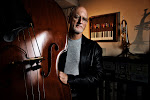
Lee Harris/photo by Tuffer Harris
Followers
Blog Archive
About Me
- JazzyDoc
- San Diego, California, United States
- Lee Harris is a musician, writer, and veterinarian from the Seattle area, now living in San Diego. He can be heard at local gigs as a jazz bassist, but also plays guitar, cello, piano, flute and (most recently) flugelhorn, as well as composing. Jazz, classical, and latin music are his main interests, but he keeps a musically open mind.
