One of the popular historical pastimes of the 21st century is to guess what psychiatric disorder various famous people suffered from. Joan of Arc? At the very least she had severe migraines, based on her drawings of visions of the "City of God", which look remarkably like the fuzzy circular "scotomas" of these crippling headaches. Saint Paul? Temporal lobe epilepsy seems a likely diagnosis, based on that Road to Emmaus episode. Any famous Russian novelist? Clinical depression seems to be the norm for these writers. Abraham Lincoln and Winston Churchill? Depression, with a silver lining: depressed individuals often are at their best when a huge crisis looms.
Jazz musicians are a fertile subject for this post-humous mental diagnosis. In many, it is hard to tell if they had an underlying mental illness because they were primarily known for the abuse of hard drugs: Charlie Parker, Stan Getz, Chet Baker, and myriad others. Thelonius Monk was definitely a candidate for psychoactive medications; to me, his bizarre twirling during the solos of other musicians sounds like he was autistic, although other explanations have been offered. Monk's unique compositions even have some of the characteristics of drawings by autistic savants: angular, logical, and seeming to emerge in a finished, complete form rather than being gradually developed.
I am pondering these thoughts because I recently read Wynton Marsalis' new book, "Higher Ground". In his descriptions of famous jazz musicians, he laments the fact that John Coltrane, revered as the postmodern god of the tenor saxophone, was a severe obsessive/compulsive. According to Marsalis this was a tragedy, as it drove away other musicians that tired of his long, intense solos, and it alienated all but the most dedicated jazz listeners.
On the one hand, OCD seems to explain Coltrane's behavior. One of the reasons that he is so revered is that his practice habits were legendary. As a young man, he could be heard playing his scales even as he walked down the stairs to breakfast. He had a noiseless saxophone that he would take on airplanes so that he could practice in the restroom (try that now!). Even his soloing embodied a compulsion to express every melodic idea possible. When Miles Davis asked him why he soloed so long, Coltrane said "I still had something to say, and I didn't know how to stop". In his growly voice, Miles responded "Just take the #@*# horn out of your mouth".
If we accept the notion that this titan of Avant Garde jazz suffered from an obsessive/compulsive disorder, what does that mean to those of us who saw an aesthetic spirituality in his impossible dedication to practice and his endless melodies and "sheets of sound"? Many of those obsessive characteristics actually made him into the unique musician that he was, but labeling him with a psychiatric diagnoses somehow taints the legend. When we listen to his later recordings, are we hearing a transcendent genius, or simply witnessing the final train-wreck of a mental illness?
There is a concept that we should view all forms of mental illness as simply "neural diversity", similar to the racial and cultural diversity that makes our society richer and more complex. And yet when we know someone personally with mental illness the suffering seems to outweigh any beneficial side-effects that come with it. If nothing else, this conflict suggests that we should be more conservative about medicating away those behaviors that fall outside the norm.
Listening to Coltrane's beautiful ballad, "After the Rain", you can almost hear the peace that comes when the noise of an unquiet mind comes to rest. That may be enough of an answer.
Musings about music and more
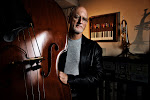
Lee Harris/photo by Tuffer Harris
Followers
Blog Archive
About Me
- JazzyDoc
- San Diego, California, United States
- Lee Harris is a musician, writer, and veterinarian from the Seattle area, now living in San Diego. He can be heard at local gigs as a jazz bassist, but also plays guitar, cello, piano, flute and (most recently) flugelhorn, as well as composing. Jazz, classical, and latin music are his main interests, but he keeps a musically open mind.

1 comment:
Great blogs, Lee. I'm subscribing and will look forward to your future musings as I have for all the years I've know you. It's interesting that you're picking this subject right now. I just got back from Port Townsend and couldn't shake the notion that all of the musicians there were struggling with various emotional afflictions to differing degrees, of course.
It's not a new notion, of course, that musicians and artists are more emotional, moody and volatile than normal folk, but I too wonder if there is something more.
Post a Comment